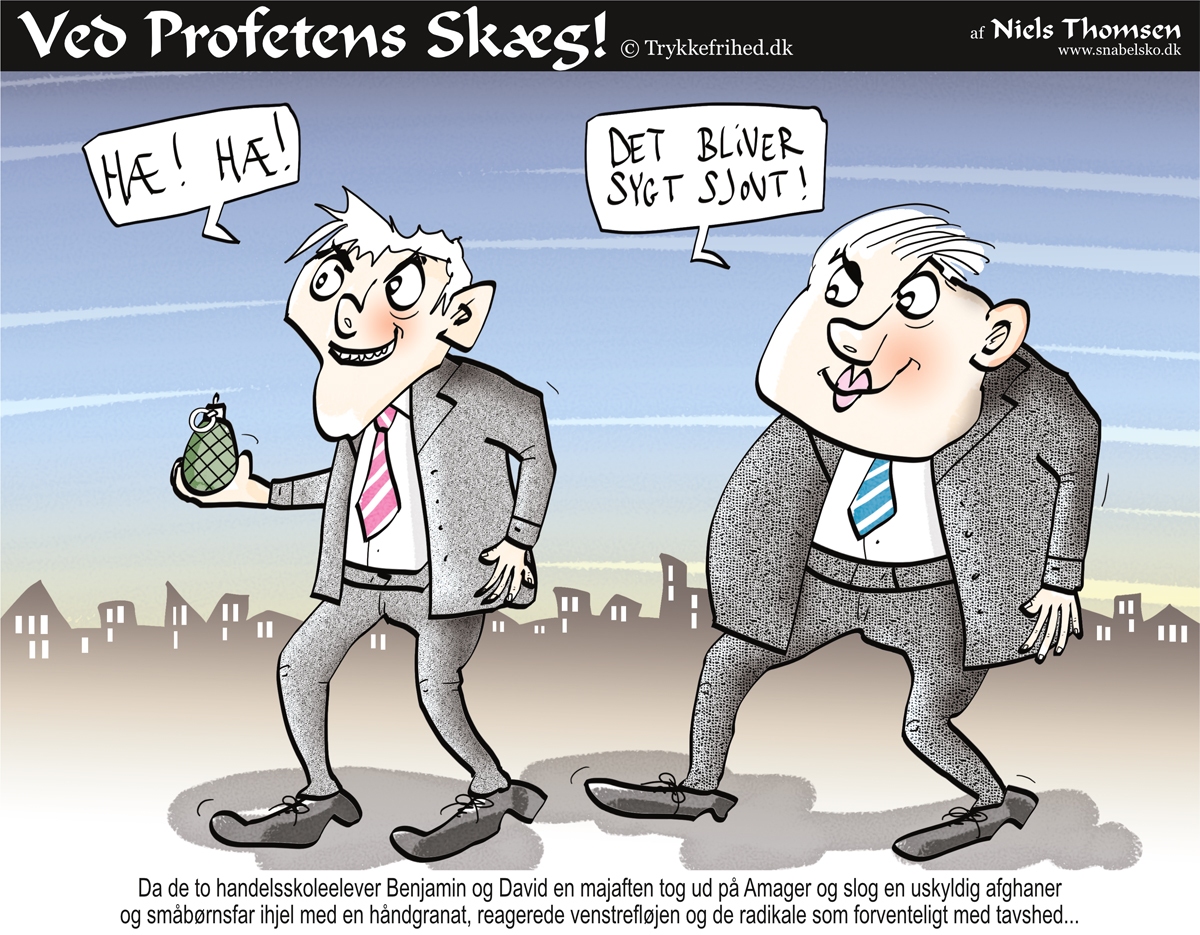

A recently concluded election campaign always invites reflection. One of the things that troubles me most, as an old hand with the professional baggage of seven campaigns behind me, is the unpredictability of the themes that come to dominate. They can never be foreseen. Who, for instance, would have imagined that clean drinking water and the issue of tail docking in piglets would become two of the most prominent campaign topics? One might have thought the parties had rather more to say.
Unpredictable themes — and who selects them
This is where the media’s prioritisation of issues comes into play. It is a well-known and long-standing fact that the vast majority of Danish journalists lean comfortably to the left of centre, and even the dullest observer can hardly be surprised that only left-leaning party leaders receive audible applause when DR hosts prime-time leaders’ debates — simply because the audience is typically drawn from nearby educational institutions.
The visible and the invisible
Far less noticeable, however, are all the issues the media pass over in silence. No one takes note of them because they are drowned out by other topics — perhaps further amplified by the fact that many are already absorbed in debates within social media echo chambers, where one generally agrees with everything appearing in one’s own feed. But might this very focus on social media weaken criticism of the established media?
Consider one example: On 12 March, Berlingske ran a story reporting that a majority of Danes would prefer fewer Muslims entering the country than leaving it, based on a survey conducted by Verian. One might have expected this to be a gift to centre-right parties. Yet the article never took off. It remained confined to Berlingske’s own ecosystem and was picked up only by a handful of alternative outlets, including this one and Den Korte Avis. Depending on the search criteria used in the period from 12 March and a month ahead, a search for the survey on Muslim immigration yields a single result, whereas a search for something like “drinking water” produces more than 4,000 hits.
When stories die in silence
Admittedly, the story about the Verian survey did circulate on social media — but hardly beyond the echo chambers already inclined to agree with its message. This is precisely my point: social media act as a lightning rod for the genuine frustration that would arise if people realised how little the media actually engage with the issues that concern them. But can we speak of censorship of unwelcome topics? No, it is not that simple. Editorial offices merely prioritise the issues they themselves care about.
In Germany, the journalist Alexander Teske published the book Inside Tagesschau – zwischen Nachrichten und Meinungsmache in 2025, drawing on his six years working at Germany’s most-watched news programme. It will surprise no one that German public service media, shaped by the country’s history, see it as a particular duty to discredit a party such as Alternative für Deutschland.
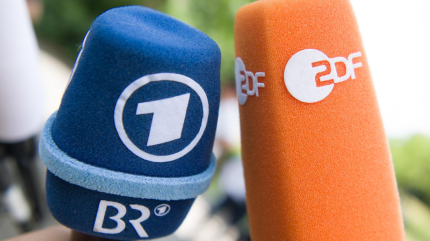
Initially, the party’s representatives were rarely invited onto debate programmes. Once the party became too large to ignore, they were invited — but frequently interrupted or otherwise harassed. One example occurred in 2023, when the AfD leader, in what was meant to be a relaxed summer interview format, was repeatedly drowned out by demonstrators below the terrace chanting “Scheiss-AfD” through loudspeakers. It remains a mystery who allowed protesters to position themselves so close to ZDF’s capital studio, right next to the Reichstag building, where access is normally highly restricted. Unsurprisingly, the matter was never clarified.
Public service as participant
Teske’s argument, however, is not merely the obvious point that a party like AfD is treated differently. More fundamentally, it is that a large share of Germans — who contribute roughly DKK 50 billion annually in compulsory licence fees to ARD/ZDF — never see their views or concerns represented in prime-time broadcasting. The boundary between objective news reporting and journalists’ own opinions has effectively dissolved.
Another issue is the close ties between editorial offices and the established political parties. Consider the respected journalists who spend a few years working as spin doctors for a minister, only to return later to the newsroom in a more senior position. If a journalist “applies for a job” in a ministry in this way, it follows naturally that their journalism becomes little more than a mouthpiece for that minister — and conversely, that they will be favourably disposed towards the government upon returning to editorial work.
Close ties and blind spots
Add to this the fact that newsrooms tend to be composed of people with similar educational backgrounds and political outlooks. In Germany, resistance to public service media is growing. They are governed by the federal states, and if AfD gains influence in the eastern Länder, a media agreement could collapse, as it requires unanimity among the states.
Denmark and Germany are not directly comparable, but measured per capita, the costs of institutions such as DR are proportional to those in Germany. The difference is that in Denmark, few people notice the licence fee now that it is collected through taxation. In Germany, by contrast, every household is charged €210 per year in a compulsory fee, whether they consume public service content or not — and some who have refused to pay have already been imprisoned.
There is little doubt that parallels exist between ARD/ZDF on the one hand and DR on the other. Yet the issue is not so much one of overt censorship as of the insular nature of editorial environments and their prioritisation of topics. For that reason alone, Alexander Teske’s book is well worth reading — though it is somewhat weakened by his own attempt to distance himself from AfD.
Inside Tagesschau – zwischen Nachrichten und Meinungsmache
Alexander Teske
LMV Verlag, 292 pages
€24