
The Assassination Attempt and the Political Reaction
During the past week, U.S. President Donald Trump was the target of another assassination attempt. It was the fourth serious attempt since his re-election campaign began, and the third in which shots were fired.
This time, the attacker was a university lecturer in his thirties with no criminal record. He had passed security by renting a room at the hotel hosting the annual White House Correspondents’ Dinner. Suddenly, heavily armed, he stormed through the foyer and past the first security cordon before being shot down by Secret Service agents at the very last moment.
Trump’s reaction was stoic. “It happens to all significant presidents,” he remarked — a reference to his belief that he stands at the helm of America’s turn away from the liberal hegemony and back toward political realism: states have interests, not friends. (On Danish public radio, P1 Morgen insisted — deliberately or not — on translating Trump’s phrase “I’ve turned this country around” as “I’ve turned the country upside down.”)
When a journalist asked whether he had considered wearing a bulletproof vest, Trump replied that he did not need to look ten kilos heavier. He added that he intended to hold another event as soon as possible because, interruption aside, the evening had been rather pleasant.
Trump as a Target — Then and Now
Attempts on Trump’s life began almost as soon as he entered politics. In 2016, a British citizen at a rally in Las Vegas attempted to seize a police officer’s firearm in order to “shoot and kill Trump.” In 2017, a man tried to ram the presidential limousine, The Beast, with a forklift as the motorcade passed through Mandan, North Dakota.
Beyond the countless threats that have led to prosecutions, several men have also attempted to storm stages at Trump rallies to assault him physically.
To be fair, the American president has always been a target for terrorists. ISIS had progressed so far with plans to assassinate Trump during a visit to Manila in the Philippines that the plot was foiled only twenty minutes before Air Force One landed. The hatred was likely aimed less at Trump personally than at the American presidency itself.
The same could be said when Iran’s clerical regime dispatched Pakistani operative Asif Raza Merchant to assassinate Trump, former president Joe Biden, and former UN ambassador Nikki Haley.
When Hatred Becomes Culturally Acceptable
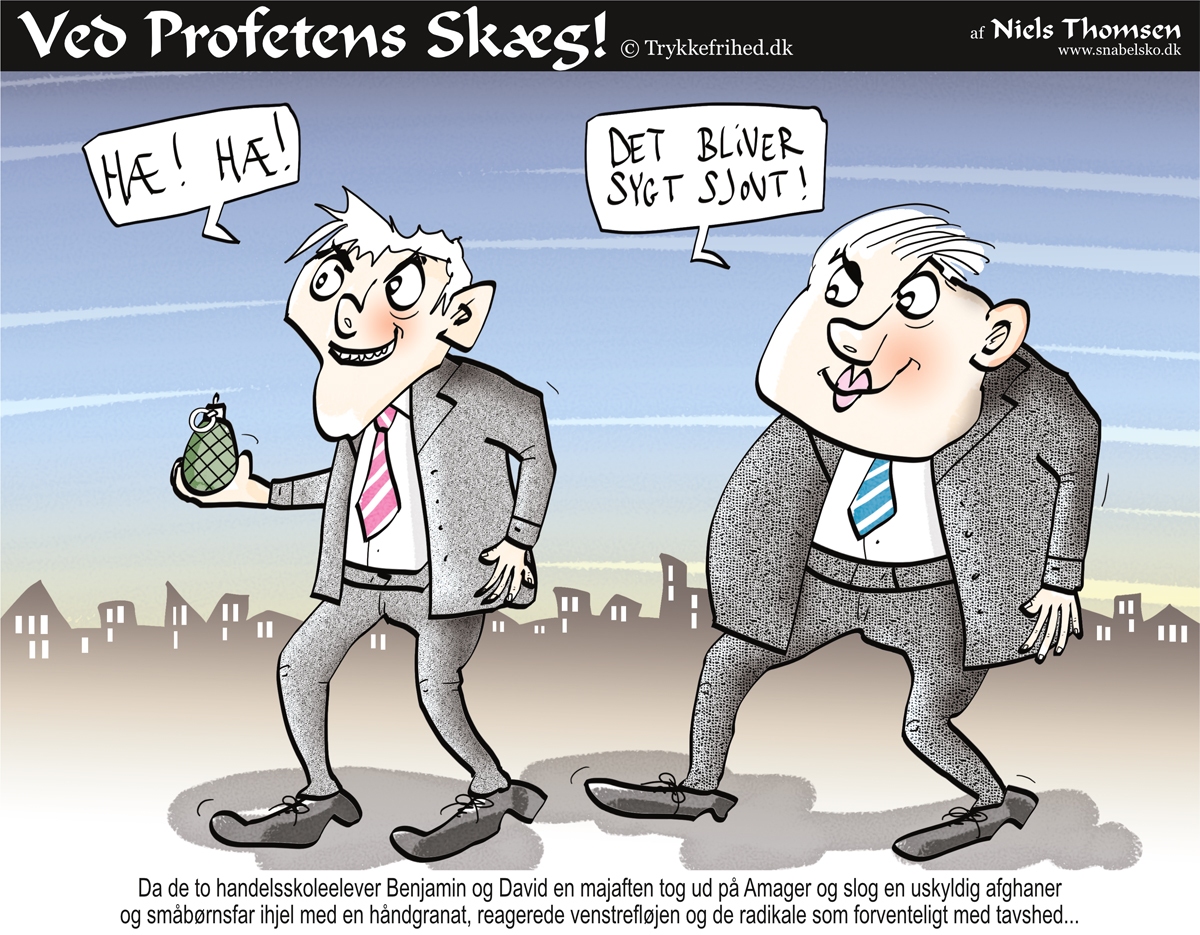
The latest assassination attempt has naturally reignited debate over political rhetoric and prompted renewed accusations between political camps over who bears the greater responsibility. (It is the Left, dehumanising as it has become — something also reflected in the imbalance of political violence.)
“Why does popular culture wink and nod at the widespread metaphorical killing of Republican presidents?” asked historian Victor Davis Hanson.
“Liberals used to believe that words mattered and images had consequences; the casual glorification of carnage trivialized violence and only made it more acceptable — and likely.”
From “Kill Bush” to “Kill Trump”
“In 2017, the obsessive hatred of Trump led, for instance, to many obscenities: Madonna told us she dreamed of blowing up the White House, comedian Kathy Griffin posed with a bloody facsimile of Trump’s head, Snoop Dog shot a Trump likeness in a video, a Shakespearean company ritually stabbed Trump-Caesar every night on stage, Johnny Depp joked, ‘When was the last time an actor assassinated a president? … It has been a while, and maybe it is time.’”
But such “kill chic” is hardly new — nor is it merely a reaction to Trump’s reckless tweets or undisciplined outbursts.
In 2012, a model of former president George W. Bush’s head appeared on a spike in Game of Thrones — “by accident,” of course. By then, however, “kill Bush” chic was already a tired genre.
During the 2004 election campaign, publisher Alfred A. Knopf released Nicholson Baker’s novel Checkpoint, essentially a dialogue about fantasies of assassinating President Bush. (The genre has since been “updated” in To Kill the President, by British author Jonathan Freedland writing under the name Sam Bourne.)
In October 2004, long before Johnny Depp’s infamous comments, Guardian columnist Charlie Brooker lamented the absence of a presidential assassin for Bush:
“John Wilkes Booth, Lee Harvey Oswald, John Hinckley Jr. — where are you now that we need you?”
Words Are Not Violence
“Between the kill-Bush and kill-Trump chic was the welcomed, calmer hiatus of the eight-year tenure of Barack Obama.”
Back then, people joked that Barack Obama delivered speeches behind bulletproof glass not to protect himself, but because his audiences — consumed by racism — feared he might suddenly start shooting at them from the podium.
Journalist Glenn Greenwald reminds us that:
“By demonizing Trump with some of the worst accusations — saying he is a fascist, a Nazi, a white supremacist, a war criminal, etc. — liberals and other Trump critics are endangering his safety and implicitly, or even explicitly, offering justifications for trying to kill him.”
Yet Greenwald wisely warns against moving from criticism to censorship:
“Every political faction has used it in an attempt to silence what are otherwise constitutionally protected ideas by conflating them with violence (‘words are violence’).”
He points to the aftermath of the 2022 Buffalo massacre, when prominent conservatives who opposed mass immigration were immediately blamed because the shooter cited anti-immigration arguments in his manifesto.
The logic was simple: if the killer referenced certain political arguments, then those expressing such views supposedly had “blood on their hands.”
Greenwald rejects this outright.
“None of that makes anyone responsible for violence by virtue of the fact that their expressed views overlap with some violent lunatic’s manifesto.”
The Dangerous Logic of Guilt
Greenwald also notes how emotionally attractive this framework can be:
“It is extremely important for whatever side or group feels targeted to believe that they are uniquely victimized by violent and hateful political rhetoric.”
And yet American politics has always involved fierce rhetoric, personal attacks and accusations bordering on hysteria.
“The more power someone wields — and nobody wields more political power than the President of the United States — the more permissive society should be of the use of the harshest rhetoric when condemning those political leaders.”
That tradition, however unpleasant, is deeply embedded in American political culture.
Free Speech Also Protects the Ugly
A favourite of the Danish Free Press Society, the unmistakably British Douglas Murray, was present during the latest assassination attempt. He, too, had studied the attacker’s manifesto and concluded that it reflected political madness from both sides.
“Free speech is often ugly, and curtailing it is uglier still,” he observed.
Yet even Murray admits to being alarmed by how “normalized this ugly discourse has become.”
The Demonisation from Within the System
There is, however, another factor that often escapes attention: Trump’s confrontation with “the Swamp,” the “deep state,” the permanent bureaucracy — or whatever one chooses to call the entrenched governing apparatus.
Even before Trump sat behind the Resolute Desk in 2017, the outgoing Obama administration had launched the narrative that Trump had effectively stolen the 2016 election with Russian assistance. This childish and fundamentally false story — that orange Hitler and Russian Hitler together constituted an axis of evil — was embraced uncritically by much of the media, which then covered the years-long Mueller investigation as though it contained genuine substance.
Trump thus ceased to be merely an aesthetically vulgar figure in American politics. Through the eyes of the press and intelligence establishment, he became an illegitimate president — an existential threat to “our democracy.”
It is difficult to find a comparable example in modern American politics of such sustained institutional demonisation. And such demonisation inevitably legitimises hysterical reactions from mentally unstable individuals who come to imagine themselves as saviours of the nation.
As professional Trump-hater — and the phrase is not used polemically — Rick Wilson once declared on MSNBC: Trump would not stop “until somebody puts a bullet in his head.”
A Near-Assassination and a Trumpian Punchline
A few days after the assassination attempt in Butler — an attack that came within millimetres and milliseconds of costing Americans their future president — Trump told Fox News that the experience had not left him psychologically shaken.
His wife, Melania Trump, however, had taken it much harder.
“But perhaps that’s actually a good thing,” he reflected. “I suppose it means she likes me after all.”
She does.